
Food is one of the few parts of IVF preparation that feels fully within your control, which is exactly why it attracts so many confident claims. Most of those claims run ahead of the evidence. This guide separates what mainstream guidance supports from what is oversold—and explains why the details belong in a conversation with a licensed physician who knows your history.
What should I eat before starting IVF?
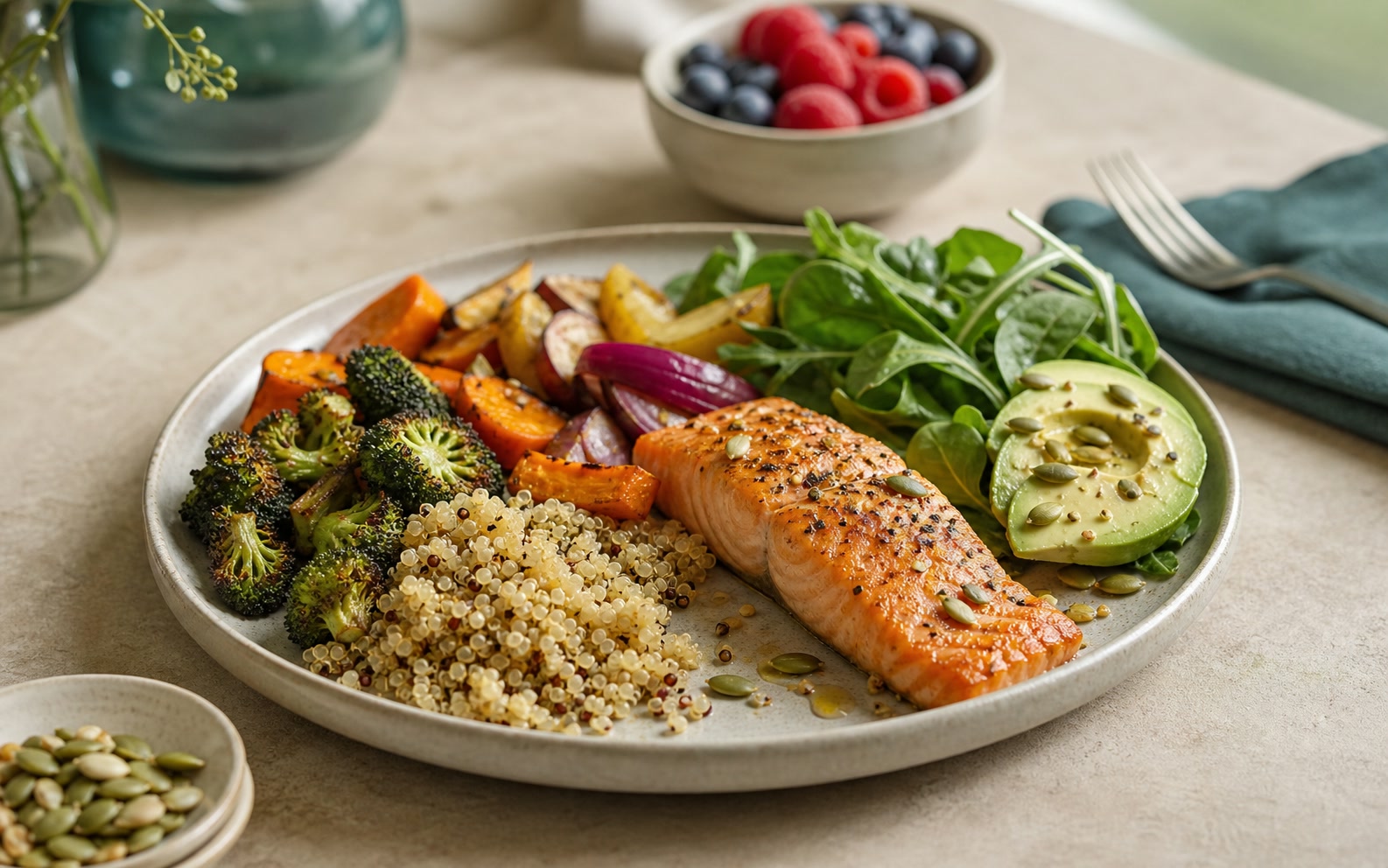
The most consistent theme in mainstream guidance is pattern over ingredient. A Mediterranean-style way of eating—vegetables, fruit, whole grains, legumes, fish and olive oil—is the pattern most often studied in fertility care, and bodies such as ESHRE and NICE frame good nutrition as part of general preconception health rather than as a treatment in itself. Studies linking the Mediterranean diet and IVF success rates are observational and mixed: there is not enough high-quality evidence that any named diet directly improves egg quality, implantation or live birth rates. Its more reliable role is supporting your general health through a demanding treatment.

Can diet really improve egg quality?
The appeal is understandable: eggs mature over roughly three months, so a "best diet to improve egg quality before IVF" sounds biologically plausible, and it is marketed heavily. The biology of that window is real; the leap from it to a specific menu is not proven. There is not enough high-quality evidence that particular foods directly improve egg quality—the more reliable contribution of good nutrition is steady energy, stable weight and well-managed conditions such as insulin resistance, all under medical supervision.
Does caffeine affect IVF success?
Evidence on caffeine and IVF outcomes is mixed, and no threshold has been firmly established for treatment cycles specifically. General preconception and pregnancy guidance, including NICE's, suggests limiting caffeine to about 200 mg a day—roughly one to two cups of coffee. Most physicians therefore advise moderation rather than elimination. If you normally drink coffee during IVF stimulation, the practical question is not "never" but "how much"—and that is worth confirming with your own care team, since advice can differ with your history.
What foods should you avoid during IVF stimulation?
Most "forbidden food" lists circulating online are stricter than the evidence supports. The sensible baseline during stimulation is standard preconception food safety—consistent with WHO-style guidance—plus avoiding alcohol while medicines are being dosed and monitored. A short list covers the categories that genuinely deserve caution.
- High-mercury fish
- Unpasteurized dairy and soft cheeses
- Raw or undercooked meat, eggs and seafood
- Alcohol
- Energy drinks and excess caffeine
- Heavily processed, high-sugar foods
Do I need supplements like CoQ10 before IVF?
Folic acid is the clearest case: WHO and NICE recommend it before conception to reduce the risk of neural tube defects, and it is standard in fertility care. Beyond that, products such as CoQ10, DHEA and myo-inositol are widely promoted as supplements to start 90 days before IVF, but professional bodies including ASRM note that the evidence for most fertility supplements remains limited—there is not enough high-quality evidence that they directly improve egg quality, implantation or live birth rates. Some products also interact with prescription medicines or affect laboratory testing, which is why your full list deserves one complete, individualized review with a licensed physician who knows your history.
What should I eat after egg retrieval?
Many people feel bloated for a few days after retrieval, and gentle choices help: fluids with electrolytes, adequate protein, smaller and more frequent meals, and enough fibre to offset the constipation that can follow medicines and reduced activity. No special menu has been shown to be necessary before embryo transfer either—a normal, balanced pattern matters more than any transfer-day ritual. One caution sits outside diet altogether: rapidly worsening bloating, abdominal pain, nausea or reduced urination can signal ovarian hyperstimulation syndrome and should be reported to your clinic promptly, not managed with food.
Before your consultation: preparing your diet questions
Diet advice is only useful when it fits your medical history, your medicines and the way you actually eat. Rather than adopting a template, bring the raw material for an individualized conversation—your physician, and where available a registered dietitian, can adapt general guidance to you.
- A few days of typical meals
- Complete supplement and medicine list
- Usual caffeine and alcohol intake
- Allergies and dietary restrictions
- Cultural or religious food practices
- Recent weight or appetite changes