
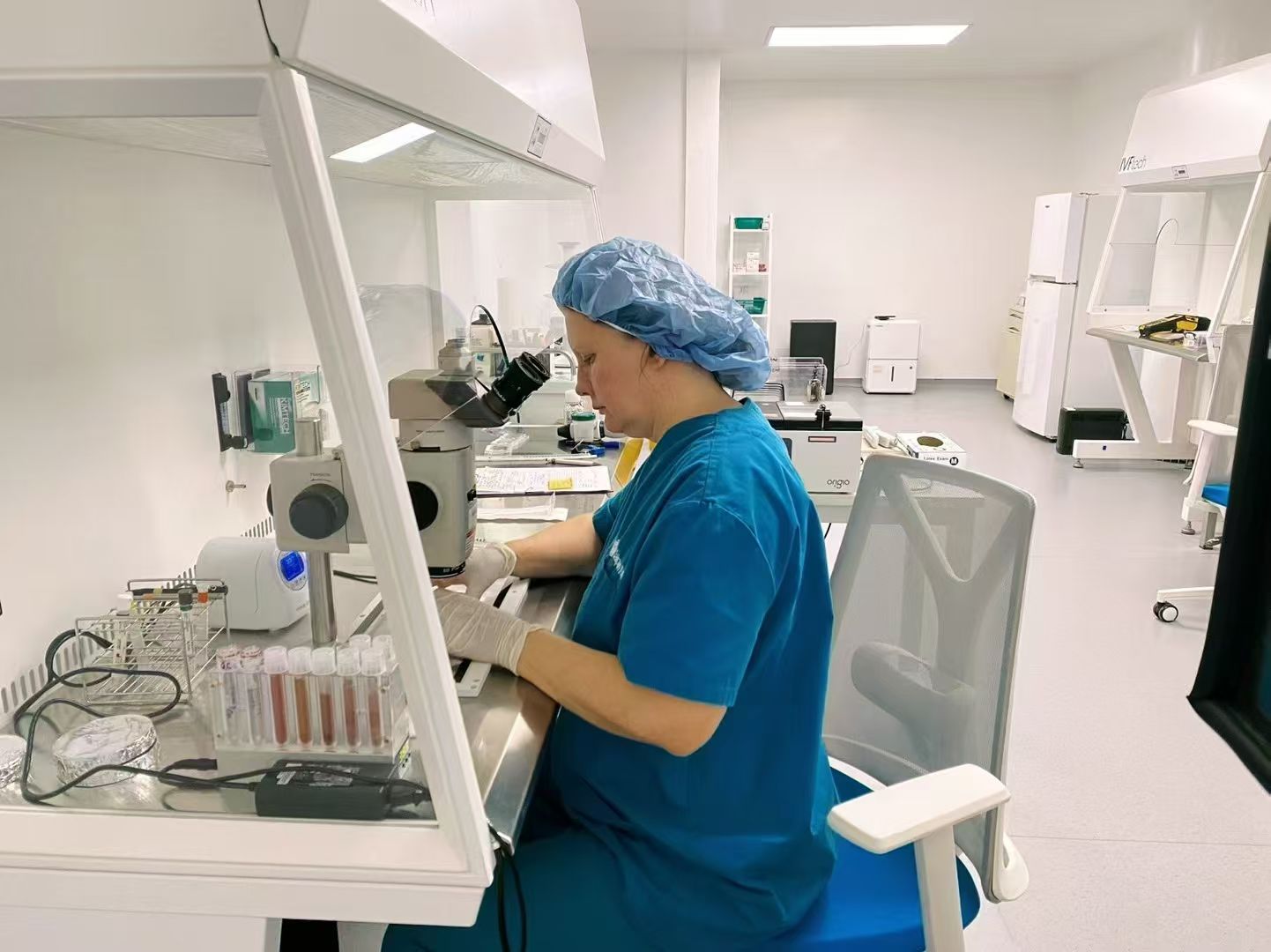
The semen analysis is often the first fertility test that produces a page of numbers, and often the male partner's first prompt to consider his own fertility. It arrives with decimal places, percentages, sometimes reference values, and usually no explanation of what it means. This article explains what the test is for, what the laboratory looks at, how a sample is collected, what the words on the report describe, why the range called normal at one laboratory may not match another's, why guidelines commonly ask for a second test, what happens if two results in a row come back abnormal, and how add-on tests such as sperm DNA fragmentation testing are currently viewed by guideline bodies and regulators. It will not say what an individual result means: a semen analysis is read alongside a person's history, examination, medications, recent illness and wider situation, and that interpretation belongs with a licensed physician who has all of it in front of them. Nothing here is a diagnosis, and no number is a pass mark or verdict.
Why does the male partner need a semen analysis at all?
ASRM's patient fact sheet on male fertility evaluation says male factors alone cause infertility in 20 to 30 percent of couples and contribute in another 20 to 30 percent, so roughly half of couples seen for infertility involve a male factor; it defines infertility as the inability to achieve a successful pregnancy, judged on health, age and test results together, not on any single measurement. ASRM suggests evaluation after 12 months of regular unprotected sex for heterosexual couples if the person with ovaries is under 35, or 6 months if 35 or older; the NHS advises seeing a GP after more than a year of regular sex without contraception, or 6 months if the partner is 36 or over, so the exact figure differs slightly between health systems. Those intervals assume nothing suggests a problem; ASRM's common causes include ejaculation problems, varicocele, obstruction, hormonal issues, genetic abnormalities and certain medications, and anything already known can be raised with a GP or fertility specialist without waiting. Cleveland Clinic describes the semen analysis as used both to look for fertility problems and to confirm a vasectomy has worked. ASRM describes the male evaluation as a medical and reproductive history with one or more semen analyses, and the WHO laboratory manual calls the test useful for investigating male fertility status and for monitoring spermatogenesis during and following fertility regulation and other interventions. Whether to test now is a conversation for a GP or fertility specialist.
What does a semen analysis actually measure?
Cleveland Clinic describes a semen analysis as a laboratory test that examines a semen sample under a microscope, used both to look for fertility problems and to confirm that a vasectomy has worked. The NHS describes it as a test of the amount of sperm in the semen that also checks how fast the sperm move and the shape of the sperm. The WHO laboratory manual for the examination and processing of human semen, now in its sixth edition and published in July 2021, is a 276-page reference document setting out procedures and methods for laboratories, written for laboratory managers, scientists and technicians rather than for patients. WHO describes those standardised procedures as intended to maintain and sustain the quality of analysis and the comparability of results from different laboratories, and notes that semen analysis may be useful in both clinical and research settings. A semen analysis is a description, not a score: it describes how much fluid there was, how many sperm were in it, how many were moving and in what way, how many had a typical shape, how many were alive, and what else the laboratory recorded, but it does not by itself say why any of those things are as they are. Cleveland Clinic notes that results usually come back a few days after the sample is given and that a healthcare provider will explain them, and that explanation, from a clinician who knows the history, is the part that matters.
How do you prepare for the test, and how many days of abstinence are needed?
The most common preparation question is how long to abstain. Cleveland Clinic advises no sexual activity for two to seven days before a semen analysis, explicitly including both intercourse and masturbation; if a clinic gives a narrower instruction, follow the clinic's own instruction. NICE notes separately that the WHO reference ranges are only valid for the semen analysis tests the World Health Organization sets out. Where a partner helps produce the sample, Cleveland Clinic advises avoiding unprotected intercourse and lubricants, noting that saliva, vaginal lubrication and manufactured personal lubricants may all affect sperm, so a sample can be affected for reasons unrelated to the person producing it. A quiet inventory of the previous few months helps too. ASRM describes the initial male evaluation as a medical and reproductive history together with one or more semen analyses, so expect questions about health, illness and medication as well as the sample. A fever, a course of medication, a hospital admission or significant illness is easier to note with approximate dates beforehand than to reconstruct afterwards, and a clinic cannot take account of anything nobody mentions. This is not about gaming a result. Cleveland Clinic gives the reason for the abstinence window plainly, that refraining from sexual activity means sperm counts are at their highest level so the analysis is as accurate as possible, and the laboratory needs a sample collected the way its protocol assumes, so the clinician reading the report has something meaningful to interpret.
How is the sample collected, and what happens if producing one on the day is difficult?
Cleveland Clinic describes masturbation as the preferred collection method, often at home, though also possible in a private room at a clinic, and specifies a sterile, wide-mouthed container labelled with the patient name and collection number, advising against touching the inside. For home collection, Cleveland Clinic advises bringing the sample to the fertility clinic or laboratory within one hour, kept at room temperature, around 20 degrees Celsius or 68 degrees Fahrenheit; couples travelling to a clinic in another city or country should settle that window in advance. Cleveland Clinic adds that any semen spilled or missing the container should not be collected into it or cleaned up, because that could contaminate the sample, and that a provider should be told once collection is finished; the laboratory measures volume and can only account for a partial sample if it is told about one. Some people find it difficult to produce a sample on a scheduled day in an unfamiliar building, which is worth raising with the clinic when the appointment is booked rather than on the day. Cleveland Clinic notes one alternative: where masturbation is not possible for religious reasons, a provider can supply a non-lubricated condom for use during intercourse. Difficulty with ejaculation is something clinics investigate, and ASRM lists ejaculation problems among the common causes of male infertility and names medication among the treatments used. Whether any of that applies is for the clinic's andrology team or a licensed physician to judge.
What do the words on the report mean - volume, concentration, motility and morphology?
Volume is the amount of fluid in the ejaculate, in millilitres; a consistently low volume is one a clinician follows up, not a number to read alone, and ASRM lists obstruction and ejaculation problems among common causes of male infertility. Concentration is how many sperm are in each millilitre, total sperm number how many were in the whole sample; different measurements, and a report may carry both. NICE, setting out the WHO reference values, gives concentration in millions per millilitre and total sperm number in millions per ejaculate. Motility is movement, usually on more than one line: NICE describes total motility as the percentage of progressive and non-progressive motility combined and reports progressive motility separately, which is why two figures can disagree. Morphology is shape, described by NICE as the percentage of normal forms assessed against the WHO manual's criteria, with reference ranges valid only for WHO's semen analysis tests; a licensed physician reads it alongside the rest of the report and the person's history. Vitality is the proportion of live spermatozoa, pH how acidic or alkaline the sample is, reference figures from NICE and Cleveland Clinic both above 7. Cleveland Clinic adds liquefaction time, the sample becoming liquid 15 to 30 minutes after collection, and white blood cells, normally in small amounts, more than one million per millilitre called pyospermia; a raised count is a prompt for a clinician to look further, not a diagnosis in itself or something to act on alone.
Why do the normal ranges differ from one clinic or one country to another?
NICE, in guideline NG257 on fertility problems published in March 2026, directs clinicians to compare semen analysis results with WHO reference values, and gives a sperm concentration reference value of 16 million per millilitre or more; the Cleveland Clinic patient page presents the same parameter differently, giving a normal range of 15 to 259 million per millilitre. The two are not a contradiction but two kinds of statement written for different readers. Reference values are revised over time: the WHO laboratory manual is in its sixth edition, published in July 2021, and a report or a clinic page may still be built around an earlier one. NICE prints a 95 percent confidence interval beside most of the values it lists, giving 15 to 18 alongside the concentration value of 16 million; that interval describes how precisely the reference value itself has been estimated, not a second range for a result to be scored against. The values are also method-specific: NICE states plainly that the reference ranges are only valid for the semen analysis tests outlined by the World Health Organization. WHO describes its standardised procedures and methods as intended to maintain and sustain the quality of analysis and the comparability of results from different laboratories, so the same figure from two laboratories is not automatically the same measurement. When comparing a result from a clinic abroad with one from home, ask which reference standard each laboratory used, and let a licensed physician compare them.
Why is one abnormal result not a diagnosis, and why is the repeat test three months later?
NICE recommends that if the result of the first semen analysis is abnormal, a repeat confirmatory test should be offered. The NHS puts it in patient language: where the first test finds a possible problem, another semen analysis usually follows around three months later. ASRM describes the initial male evaluation as one or more semen analyses. The second test does not mean the first went wrong: Cleveland Clinic notes that multiple semen analyses help a provider get a more accurate idea of sperm production, and that a provider may schedule another analysis a few days or weeks later. NICE states that the repeat test should ideally be undertaken three months after the initial analysis, to allow time for the cycle of spermatozoa formation to be completed, so a single sample is a snapshot of one production cycle rather than a fixed characteristic of a person. NICE specifies an exception: where a gross spermatozoa deficiency has been detected, meaning azoospermia or severe oligozoospermia, the repeat test should be undertaken as soon as possible rather than after three months. Azoospermia means semen in which no sperm are found; Cleveland Clinic uses it of semen that has become sperm-free in the weeks after a vasectomy. A shorter interval is therefore not necessarily a careless clinic, and a longer one not necessarily a slow clinic; which interval applies depends on what the first result showed, and that judgement belongs with a licensed physician rather than with a calendar.
What happens next if two results come back abnormal?
After two or more abnormal semen analyses, NICE's 2026 recommendation for men, trans women and non-binary people with male reproductive organs is examination of the scrotum and testes and consideration of serum testosterone and gonadotrophin levels. The NHS adds that if the second test also finds a problem, a specialist referral follows, with possible blood tests, an ultrasound of the testicles or a urine test. ASRM names that specialist: a urologist specialising in male infertility, who collects further information, examines and may recommend more testing. ASRM also sets thresholds: below 15 million total motile sperm, its mark for a low count, consider reproductive hormonal testing; below 5 million, specific genetic testing may be needed. Total motile sperm is not the concentration per millilitre on the report, and these thresholds choose the next test rather than judge a result. A low number is a finding, not a cause, so examination and blood tests come before treatment. ASRM lists genetic abnormalities, hormonal issues, ejaculation problems, varicocele, obstruction and certain medications among common causes, and treatments: surgery such as varicocele repair or vasectomy reversal, medication for hormonal or ejaculation problems, and assisted reproduction with IVF where the count is low or sperm must be surgically retrieved. The NHS is plain that with a low sperm count it may still be possible to conceive naturally, and there are fertility treatments that can help. Which applies to any individual is for a licensed physician to say after examination.
Do you need a sperm DNA fragmentation test, or any of the other add-on tests?
Sperm DNA fragmentation testing is an add-on the HFEA lists. The HFEA explains that mature sperm take around two months to make, that DNA packaging in sperm is complex, and that DNA strands may break or fragment during maturation, a suggested cause of failed IVF cycles or miscarriage. It states some evidence relates sperm DNA damage to treatment outcome, but that the evidence is conflicting and depends on which of several tests a clinic uses, and that the result is unlikely to change how treatment is managed; it calls the test non-invasive, with no additional known risks and no traffic light rating. NICE's March 2026 guideline is direct: do not carry out testing for sperm DNA integrity or fragmentation. That recommendation is national; the HFEA describes guidance still moving rather than closed. NICE recommends other tests only in defined situations: Y chromosome microdeletion testing in idiopathic azoospermia or sperm concentration below 1 million per millilitre, CFTR mutation testing in idiopathic suspected obstructive azoospermia or a vasal abnormality on examination, and karyotype testing in idiopathic azoospermia, considered also where concentration is persistently below 5 million per millilitre. Where a specific genetic defect associated with male factor infertility is found, NICE recommends appropriate genetic counselling. The WHO manual sets out protocols for routine, optional and research tests. If an add-on is proposed, what it would change and what it costs are fair questions for the clinic, and the questions below are worth taking to a licensed physician.
- Which reference standard does your laboratory use for this semen analysis, and which edition of the WHO manual are your reference values based on?
- How many days of abstinence do you want before the sample, and do your instructions differ from the general two to seven days?
- Can the sample be produced at home, and how long do I have to bring it in?
- If producing a sample on the day is difficult, what arrangements can be made in advance?
- Given what this first result shows, do you recommend a repeat test, and at what interval?
- Is anything from the past few months, such as illness, fever or medication, relevant to how you are reading this result?
- If a second result is also abnormal, what examination and blood tests would you expect to do, and would you refer to a specialist in male infertility?
- If an add-on such as a sperm DNA fragmentation test is proposed, what would the result change about the plan?
SOURCES
Sources and review method
Editorially reviewed against the sources below on 3 September 2026. Nothing here is a diagnosis or a personalised recommendation, and what any individual semen analysis means requires a licensed physician who knows the full medical history of the person tested.
- American Society for Reproductive Medicine (ASRM) / ReproductiveFacts.orgMale Fertility Evaluation: What do I need to know? (revised 2023)
Supports the statements that infertility is defined as the inability to achieve a successful pregnancy judged on several factors together including health, age and test results rather than on a single measurement, that heterosexual couples having regular unprotected sex are advised to seek evaluation after 12 months if the person with ovaries is under 35 years old and after 6 months if the person with ovaries is 35 or older, that male factors alone cause infertility in 20 to 30 percent of couples and contribute to infertility in another 20 to 30 percent so that approximately half of couples seen for infertility involve a male factor, that the initial male evaluation consists of a medical and reproductive history together with one or more semen analyses, that where abnormalities are found on initial evaluation the man should see a urologist specialising in male infertility who will collect further information, perform a physical examination and may recommend further testing, that reproductive hormonal testing should be considered where the sperm count is low at less than 15 million total motile sperm and specific genetic testing may be needed where it is very low at less than 5 million total motile sperm, that genetic abnormalities, hormonal issues, ejaculation problems, varicocele, obstruction and certain medications are among the common causes, and that treatment options named include surgical correction such as varicocele repair or vasectomy reversal, medication for hormonal or ejaculation problems, and assisted reproduction with IVF where the sperm count is low or sperm has to be surgically retrieved.
- National Institute for Health and Care Excellence (NICE), UKInvestigation of fertility problems and management strategies | Fertility problems: assessment and treatment (NG257)
Supports the statements that NICE guideline NG257 was published on 31 March 2026, that semen analysis results from an initial assessment should be compared with World Health Organization reference values by reference to the WHO laboratory manual, that NICE gives a sperm concentration reference value of 16 million spermatozoa per millilitre or more with a 95 percent confidence interval of 15 to 18 and prints a confidence interval beside most of the values it lists, that it gives a semen volume reference value of 1.4 millilitres or more with a 95 percent confidence interval of 1.3 to 1.5 and a pH reference value of 7.2 or more, that concentration is expressed in millions of spermatozoa per millilitre and total sperm number in millions per ejaculate, that total motility is the percentage of progressive and non-progressive motility combined and progressive motility is reported separately, that morphology is the percentage of normal forms, that vitality is expressed as the percentage of live spermatozoa, that the reference ranges are only valid for the semen analysis tests outlined by the World Health Organization, that a repeat confirmatory test should be offered if the first semen analysis is abnormal, that the repeat should ideally be undertaken three months after the initial analysis to allow the cycle of spermatozoa formation to be completed but as soon as possible where a gross spermatozoa deficiency meaning azoospermia or severe oligozoospermia has been detected, that two or more abnormal semen analyses in men and in trans women and non-binary people with male reproductive organs should prompt an offer of physical examination of the scrotum and testes with consideration of serum testosterone and gonadotrophin measurement, that testing for sperm DNA integrity or fragmentation should not be carried out, that Y chromosome microdeletion testing applies in idiopathic azoospermia or sperm concentration below 1 million per millilitre, that CFTR mutation testing applies in idiopathic suspected obstructive azoospermia or vasal abnormality, that karyotype testing applies in idiopathic azoospermia and should be considered where sperm concentration is persistently below 5 million per millilitre, and that appropriate genetic counselling should be offered where a specific genetic defect associated with male factor infertility is found.
- World Health Organization (WHO)WHO laboratory manual for the examination and processing of human semen, 6th ed
Supports the statements that the WHO laboratory manual for the examination and processing of human semen is now in its sixth edition, published on 27 July 2021 and running to 276 pages, that it is a reference document setting out procedures and methods for the laboratory examination and processing of human semen written for laboratory managers, scientists and technicians, that those standardised procedures are intended to maintain and sustain the quality of analysis and the comparability of results from different laboratories, that semen analysis may be useful in both clinical and research settings for investigating male fertility status and for monitoring spermatogenesis during and following male fertility regulation and other interventions, and that detailed protocols for routine, optional and research tests are elaborated in the manual.
- Cleveland ClinicSemen Analysis
Supports the statements that a semen analysis is a laboratory test that examines a semen sample under a microscope and is used both to detect fertility issues and to confirm the success of a vasectomy, that the analysis evaluates sperm count and concentration, motility, morphology, volume, pH, liquefaction time, vitality and white blood cells, that the page gives a normal sperm concentration range of 15 to 259 million per millilitre and a normal pH of 7.2 to 8.0, that liquefaction time is given as 15 to 30 minutes after collection, that white blood cells are normally present in small amounts with more than 1 million per millilitre described as pyospermia, that no sexual activity including intercourse and masturbation is advised for two to seven days before the test, that where a spouse or partner helps produce the sample unprotected sexual intercourse and lubricants should be avoided because saliva, vaginal lubrication and manufactured personal lubricants may affect sperm, that semen spilled or missing the container should not be collected into it or cleaned up because this could contaminate the sample and a provider should be informed once collection is finished, that refraining from sexual activity ensures sperm counts are at their highest level so the analysis is as accurate as possible, that masturbation is the preferred collection method and often takes place at home but can also be done in a private room at a clinic, that the sample must go into a sterile wide-mouthed container labelled with the patient name and collection number without touching the inside of the container, that a sample produced at home should be brought to the clinic or laboratory within one hour and kept at room temperature of about 20 degrees Celsius or 68 degrees Fahrenheit, that a provider can supply a non-lubricated condom for use during intercourse where masturbation is not possible for religious reasons, that a provider may schedule another semen analysis a few days or weeks later and that multiple analyses give a more accurate idea of sperm production, that after a vasectomy it can take several weeks for semen to be sperm-free, described on the page as azoospermia, and that results usually arrive a few days after the sample is given and are explained by a healthcare provider.
- NHS (UK)Low sperm count
Supports the statements that a low sperm count is usually discovered after tests to check fertility rather than sought on its own, that with a low sperm count it may still be possible to conceive naturally and there are fertility treatments that can help, that the NHS advises seeing a GP after more than one year of regular sex without contraception or after 6 months if the partner is 36 or over, that the main test to check for a low sperm count is a semen analysis which tests the amount of sperm in the semen and also checks how fast the sperm move and the shape of the sperm, that where the first test finds a possible problem another semen analysis usually follows around three months after the first, that where the second test also finds a problem the patient is referred to a specialist for more tests which may include blood tests, an ultrasound scan of the testicles or a urine test, and that treatments mentioned include IVF, ICSI and the use of donor sperm where the sperm count is very low.
- Human Fertilisation & Embryology Authority (HFEA)Sperm DNA damage
Supports the statements that sperm DNA damage testing is listed by the HFEA among treatment add-ons, that it takes around two months for mature sperm to be made and that the way DNA is packaged in the sperm is complex, that it has been suggested that DNA strands may break or fragment during sperm cell maturation and that this may cause failed IVF cycles or miscarriage, that several different tests might be used by a clinic to assess the level of DNA damage, that there is some evidence for a relationship between sperm DNA damage and the outcome of fertility treatment but the evidence is conflicting and depends on the type of test the clinic uses, that the results of a sperm DNA damage test are unlikely to impact on the management of treatment, that the test is a non-invasive procedure performed on a semen sample usually before treatment as an additional diagnostic test, that it does not carry any additional known risks for the person undergoing treatment or any child born as a result, and that there is currently no traffic light rating for treatments relating to sperm DNA damage.