
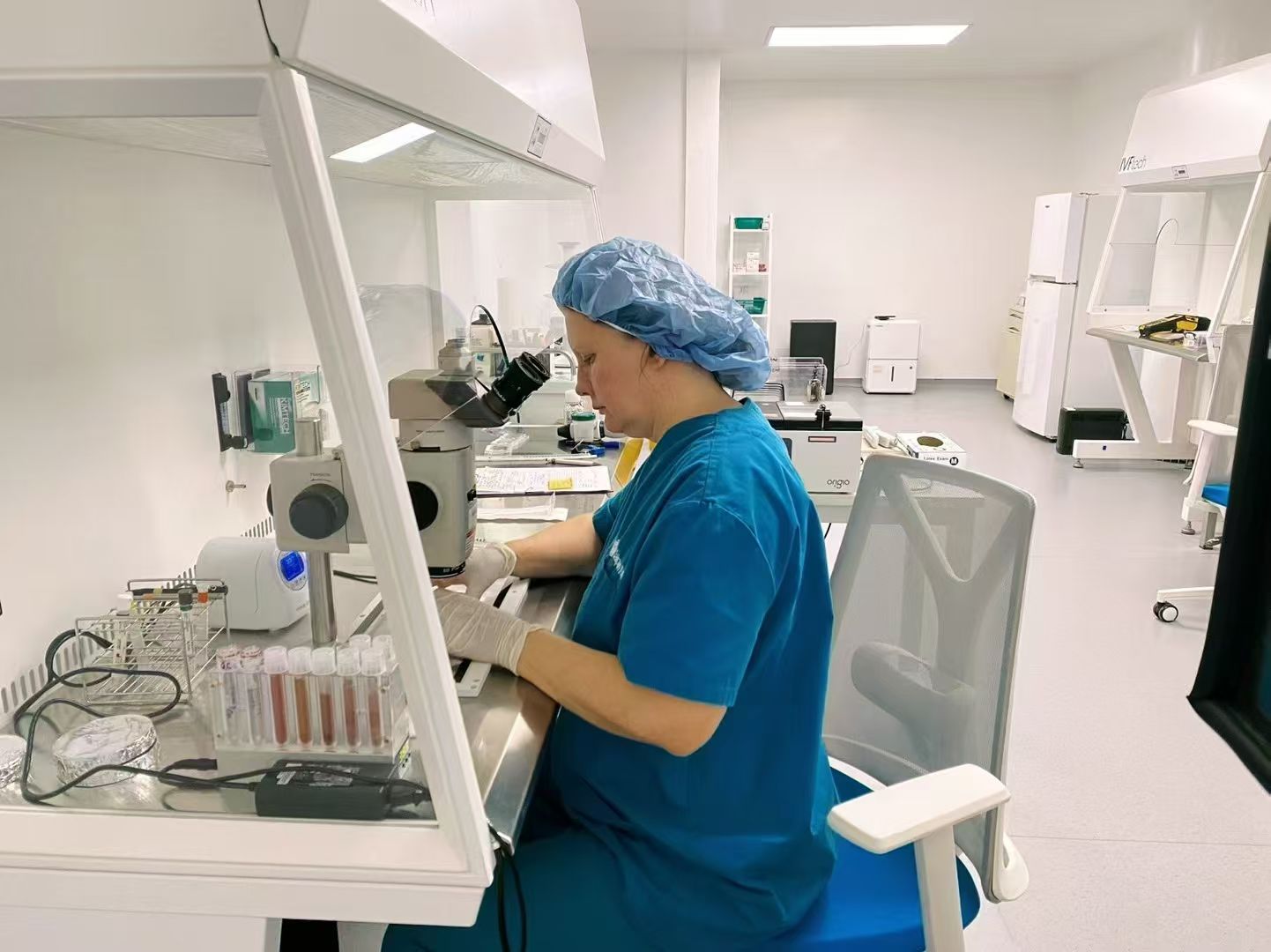
Egg freezing—known medically as oocyte cryopreservation—preserves eggs at their current stage for possible use in the future. The process follows a defined sequence, and understanding that sequence makes every later decision easier to weigh. This guide walks through each step in plain language, so you can arrive at a consultation with clear questions rather than assumptions.
How does the egg freezing process work, step by step?
A complete egg freezing cycle retrieves mature eggs from the ovaries and freezes them unfertilized. Each stage has its own purpose: testing establishes a starting picture, stimulation encourages a group of eggs to mature in one cycle, retrieval collects them, and vitrification—an ultra-rapid freezing method used in modern laboratories—prepares them for storage. Professional bodies such as ASRM and ESHRE describe vitrification as the established technique for freezing eggs today.
- Consultation and fertility testing
- Ovarian stimulation and monitoring
- Egg retrieval under sedation
- Laboratory vitrification
- Long-term frozen storage
Is egg freezing painful, and how long does it take?
Cycles commonly take about two to three weeks from the start of stimulation to retrieval, with several monitoring visits for ultrasound and blood tests along the way. Stimulation involves daily hormone injections, with response checked by blood tests and ultrasound. Egg retrieval is a brief outpatient procedure usually performed under sedation or anaesthetic. Recovery experiences vary, and a physician can explain what to expect based on your health and the clinic's instructions.
What is the best age to freeze your eggs?
As general evidence, egg quantity and quality tend to decline with age, which is why the age at freezing—not the age at future use—shapes what a stored group of eggs may offer. There is no single best age that applies to everyone: age and ovarian-reserve testing answer different questions, and ovarian reserve varies widely between people of the same age. The right timing for you is a decision to make with a licensed physician who knows your history.
Who should consider freezing their eggs?
People consider egg freezing for different reasons, and the reason shapes the conversation. Some are advised to consider it before medical treatment—such as chemotherapy, radiation or certain surgeries—that may affect the ovaries. Others have a personal or family history suggesting earlier decline in ovarian reserve, and many simply are not ready to try for a pregnancy now and want to preserve the option. Each situation calls for its own discussion with a physician rather than a general rule.

How long can eggs stay frozen?
Vitrification cools eggs so quickly that damaging ice crystals do not have time to form. Evidence is insufficient to determine whether longer storage affects egg viability, while laws and consent rules vary. Ask any clinic you are considering how storage duration, renewal and documentation work where your eggs would be kept.
Can I freeze my eggs in another country?
Some people complete an egg freezing cycle away from home, and the planning is mainly a coordination exercise. Initial consultations and some testing can often happen locally, while stimulation, retrieval and freezing take place at the destination clinic—so plan for a stay that covers the monitoring visits and the retrieval itself. Rules on storage, consent and the later use of eggs differ between countries, so ask both clinics to explain in writing which rules apply and how your records, prescriptions and monitoring results will move between your physicians.
What happens when I'm ready to use my frozen eggs?
When you decide to use stored eggs, the laboratory warms them and assesses which are suitable for fertilization, usually by injecting a single sperm into each egg. Any resulting embryos are then considered for transfer in a separate, planned treatment cycle. It is important to hold this honestly: stored eggs do not guarantee a future pregnancy—not every egg becomes an embryo, and not every embryo leads to a birth. Freezing preserves a possibility, and a careful care team will frame it exactly that way.
Questions to prepare before your consultation
Arriving with written questions makes a consultation more useful than any amount of reading beforehand. The most valuable questions are practical and specific to you: how your testing will be interpreted, what the day-to-day cycle involves, and what the long-term life of your stored eggs looks like on paper. No article can weigh these for your situation—a licensed physician who knows your history can.
- Ovarian reserve testing and interpretation
- Medication protocol and monitoring schedule
- Sedation and recovery arrangements
- Laboratory accreditation and vitrification experience
- Storage location, duration and renewal terms
- Consent and ownership documentation
- Steps for moving or using eggs later
SOURCES
Sources and review method
Editorially reviewed against the sources below on 11 August 2026. Individual treatment decisions require a licensed physician who knows your history.
- American Society for Reproductive MedicineCan I freeze my eggs to use later if I'm not sick?
Supports the explanation that planned egg freezing can preserve future reproductive options.
- European Society of Human Reproduction and EmbryologyFemale Fertility Preservation Guideline
Supports the discussion of fertility preservation as an individual clinical decision.
- Human Fertilisation and Embryology AuthorityEgg freezing
Supports the explanation that storage, consent and legal rules can affect egg freezing plans.