
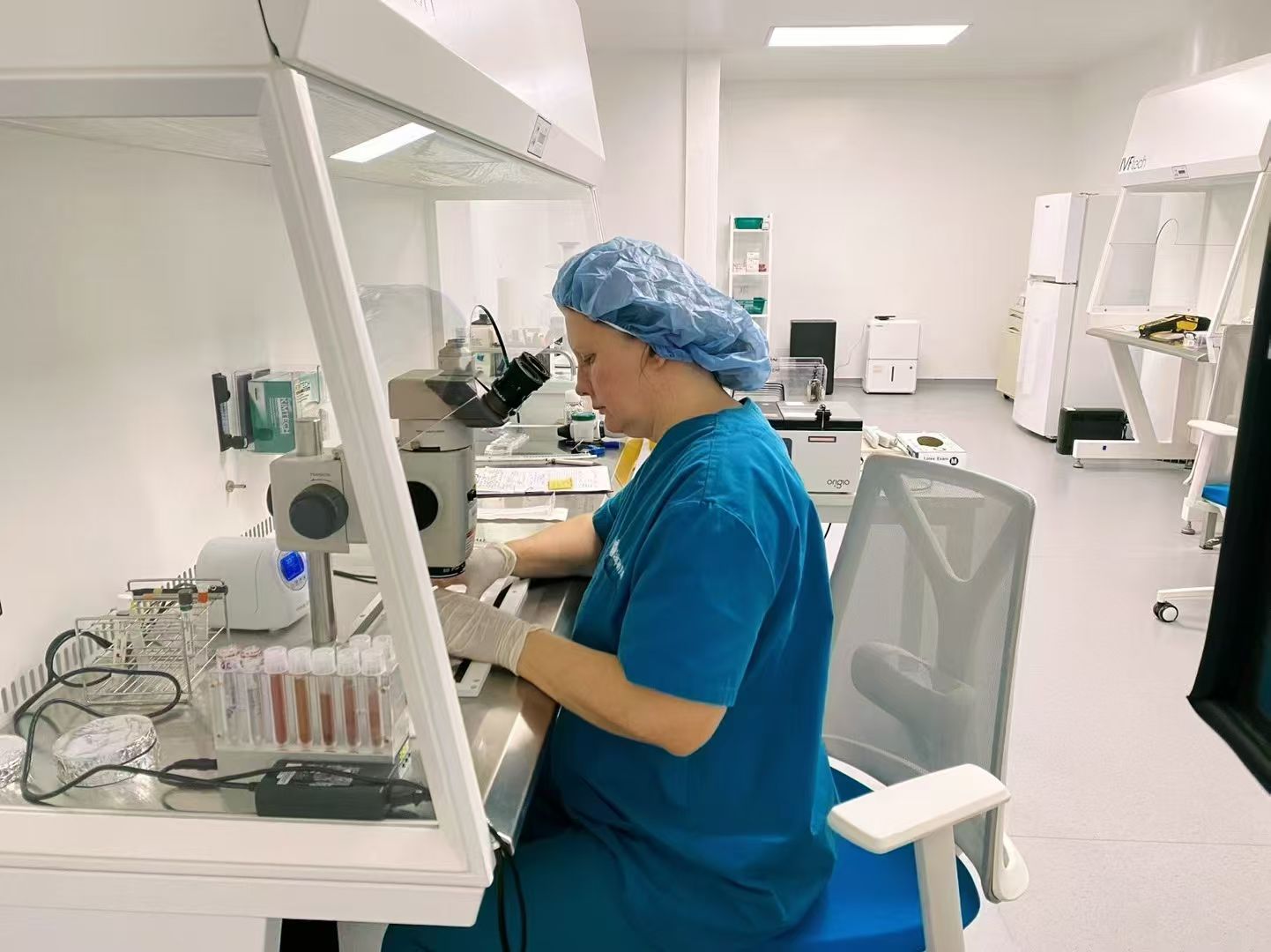
Of all the laboratory techniques inside modern IVF, intracytoplasmic sperm injection, almost always shortened to ICSI, is one patients hear about most often and see least, because it happens entirely under a microscope in the embryology lab. The idea is simple to state, a single sperm injected directly into a single egg, but the questions around it are not: how is it different from ordinary IVF insemination, who actually needs it, does it make sense when a semen analysis is normal, and what happens to the eggs afterwards. This article walks through what ICSI is and how it differs from conventional IVF, the procedure step by step as the laboratory performs it, the situations in which clinics recommend it, the evidence on using it without male factor infertility, how sperm are collected, prepared, and selected, including surgical retrieval, what happens to eggs and embryos after the injection, the risks and limitations worth discussing, what ICSI means for treatment plans that involve travel, and the questions intended parents can bring to their clinic. It draws on patient information from Cleveland Clinic, the UK fertility regulator HFEA, including its pages on ICSI and on surgical sperm extraction, the American Society for Reproductive Medicine's ReproductiveFacts.org, an open-access systematic review published on PMC, and CNY Fertility. It is general education only, and every individual decision belongs with the treating clinic and a licensed physician.
What is ICSI and how is it different from conventional IVF?
ICSI stands for intracytoplasmic sperm injection, and the name describes the technique precisely. Cleveland Clinic explains that ICSI involves injecting live sperm directly into eggs in a laboratory, and that intracytoplasmic refers to the injection taking place inside the egg's cytoplasm, the gel-like substance in the center of the egg made up of water, salt, and other molecules. The contrast with conventional IVF lies in how egg and sperm meet. Cleveland Clinic describes traditional IVF as placing thousands of sperm next to an egg on a laboratory dish, with whether one of them penetrates and fertilizes the egg left up to chance. The ASRM ReproductiveFacts.org fact sheet describes the ICSI alternative: a single sperm is injected directly into the cytoplasm of the egg using a tiny needle called a micropipette. The HFEA, the UK fertility regulator, is careful to point out how much the two approaches share, noting that treatment with ICSI is identical to IVF except that instead of mixing the sperm with the eggs and leaving them to fertilise, an embryologist injects one sperm directly into each egg, which bypasses any potential problems the sperm would have in getting inside. Everything else, from ovarian stimulation and egg retrieval through embryo culture and transfer, follows the familiar IVF path. Whether a particular cycle uses conventional insemination, ICSI, or a mix of both is a clinical judgement that belongs with the treating clinic and a licensed physician.
How does the ICSI procedure work in the laboratory, step by step?
ICSI takes place on the day of egg retrieval, after the eggs have been collected and the sperm sample has been prepared. CNY Fertility, a US clinic that publishes a detailed description of its laboratory process, explains that embryologists first remove the cumulus and granulosa cells that surround each egg so its maturity can be confirmed, because ICSI is typically performed only on fully mature eggs, identified by the presence of a structure called a polar body. The embryologist then chooses a sperm demonstrating the best available movement and shape from the processed specimen. Cleveland Clinic describes the injection itself as a sequence of small steps: the provider uses a pipette to hold the mature egg in place on a lab dish, immobilizes and picks up a single sperm using a thin needle, inserts the needle into the egg to reach the cytoplasm, injects the sperm into the cytoplasm, and withdraws the needle. CNY Fertility adds the laboratory detail that each egg is held steady with a holding pipette while the thin injection needle passes through the zona pellucida, the egg's outer coat, and deposits a single sperm inside. The next morning brings the first answer: CNY Fertility explains that the eggs are evaluated the following day for signs of normal fertilization, typically the presence of two pronuclei. How a particular laboratory carries out each step is a question for the treating clinic and a licensed physician.
When do clinics recommend ICSI, and who may benefit from it?
ICSI was designed for situations where sperm are unlikely to fertilize an egg on their own. The HFEA lists the common reasons a doctor may recommend it: a very low sperm count, sperm that are abnormally shaped or move poorly, previous IVF cycles in which fertilisation failed, sperm that had to be surgically extracted because of a vasectomy, a blockage, or a genetic condition, frozen sperm of lower quality, and embryo genetic testing cycles, where sperm sticking to the outside of the eggs would interfere with the results. Cleveland Clinic's list overlaps and extends this, naming anejaculation, retrograde ejaculation, in which semen flows backward into the bladder, a blockage in the male reproductive system, low sperm count, poor sperm quality, cycles in which traditional IVF has not led to the creation of embryos, an egg provider older than thirty-five, and the use of previously frozen eggs or sperm. The ASRM ReproductiveFacts.org fact sheet adds eggs matured in the laboratory to the picture. CNY Fertility summarizes the same ground, describing ICSI as most beneficial for moderate to severe male factor infertility, surgically retrieved sperm, prior fertilization failure, preimplantation genetic testing cycles, and previously frozen eggs. These lists overlap but are not identical, and whether any item on them applies to a particular situation is exactly the kind of judgement that belongs with the treating clinic and a licensed physician.
Is ICSI still needed when semen analysis results are normal?
This question has a clearer answer in the published literature than many patients expect. A systematic review published open access on PMC notes that ICSI has been routinely performed for severe male infertility since its first use in the 1990s, but that its use has expanded well beyond that group, with substantial growth in non-male factor cycles in both the United States and Europe. The same review examined what that expansion achieves and concluded that ICSI did not improve live birth or other clinical outcomes compared with conventional IVF in couples with non-male factor infertility, while usually increasing complexity and cost, since it requires extra embryologist resources, materials, and time. The HFEA puts the point plainly for patients, stating that there is no scientific evidence to support the use of ICSI where the cause of infertility is not male factor. That said, the indication lists in the previous section show that some reasons for ICSI, such as previous failed fertilization, previously frozen eggs, or embryo genetic testing, can apply even when a semen analysis looks normal, which is why the question cannot be settled by a laboratory report alone. A couple whose clinic recommends ICSI despite normal sperm parameters can reasonably ask what specific factor is driving the recommendation and what would change without it. Whether ICSI earns its place in any individual cycle is a decision for the treating clinic and a licensed physician.
How are sperm collected, prepared, and selected for ICSI?
For most ICSI cycles, sperm collection is straightforward. Cleveland Clinic explains that the person providing sperm usually abstains from sex and masturbation for two to three days beforehand, produces a sample by masturbation at home or at the clinic, and delivers it to the laboratory within sixty minutes of ejaculation, where a semen analysis immediately checks volume, mobility, and quality. When no sperm are present in the ejaculate, surgery can often retrieve them. The HFEA's page on surgical sperm extraction explains that these procedures can help men with obstructive azoospermia, for example after a vasectomy or an infection such as chlamydia, men who are unable to ejaculate, and men whose sperm production is affected by chemotherapy, radiotherapy, genetic conditions, or previous testicular surgery. The techniques range from PESA and TESA, in which a fine syringe is inserted into the epididymis or testicle under local anaesthetic, to TESE, a small biopsy taken through an incision, and MESA and microTESE, performed under general anaesthetic, with microTESE using an operating microscope to locate sperm-producing tubules. The HFEA notes that surgically retrieved sperm are used with a treatment like ICSI, and that poorer quality sperm may not survive freezing, so clinics may recommend using them without freezing. In the laboratory, CNY Fertility explains, the embryologist selects a sperm with the best available movement and shape for each injection. The right collection route for an individual belongs with the treating clinic and a licensed physician.
What happens to the eggs and embryos after ICSI is performed?
The injection is the midpoint of the laboratory story, not the end. CNY Fertility explains that the eggs are evaluated the morning after ICSI for markers of normal fertilization, typically the presence of two pronuclei, and that normally fertilized eggs then proceed to embryo culture. Cleveland Clinic describes the provider monitoring the fertilized egg in the laboratory and explains that a healthy fertilized egg should divide into cells and form a blastocyst within five to six days, with the embryo evaluated for size and cell mass. The ASRM ReproductiveFacts.org fact sheet gives a similar window, noting that once fertilization occurs, the resulting embryo develops in the laboratory for one to five days before transfer to the uterus. From this point onward an embryo created with ICSI is treated like any other IVF embryo. Cleveland Clinic explains that transfer occurs on the fifth or sixth day following egg retrieval, or is commonly delayed for a month or even years, in which case the embryo is frozen first, and that on transfer day a thin catheter is passed into the uterus and the embryo is placed inside, where it needs to implant for a pregnancy to begin. CNY Fertility likewise notes that normally fertilized eggs are subsequently transferred or frozen for later use. Decisions about culture length, freezing, and transfer timing belong with the treating clinic and a licensed physician.
What risks and limitations of ICSI should be discussed with a doctor?
Every source in this article is careful to say that ICSI does not make fertilization certain. Cleveland Clinic lists the procedural risks: some or all of the eggs can be damaged during needle penetration, an egg may not fertilize after the sperm injection, and an embryo can stop developing in the laboratory or after transfer. CNY Fertility adds biological limitations, including failure of egg activation, the effects of poor egg quality, and underlying sperm DNA integrity issues that the injection itself cannot fix. On longer-term questions, the ASRM ReproductiveFacts.org fact sheet states that the chance of birth defects associated with ICSI is similar to IVF and slightly higher than with natural conception, and that this may be due to the underlying infertility rather than the treatments used to overcome it, a view Cleveland Clinic echoes when it notes that experts believe the cause of infertility, not the treatment, may contribute. ASRM also notes that male infertility may have genetic causes, and the HFEA observes that male children conceived with ICSI may inherit their father's infertility, particularly where it is associated with conditions linked to the Y chromosome. The systematic review on PMC adds a practical limitation, noting that ICSI increases laboratory complexity and cost. None of this means ICSI is inappropriate where it is indicated; it means the trade-offs deserve an unhurried conversation with the treating clinic and a licensed physician.
How does ICSI fit into an IVF plan that involves traveling abroad?
ICSI happens entirely inside the laboratory, which has practical consequences for anyone planning IVF away from home. The injection takes place on the day of egg retrieval, so the person providing eggs needs to be at the clinic through stimulation and retrieval, and Cleveland Clinic notes that a fresh sperm sample should reach the laboratory within sixty minutes of ejaculation, which means the person providing sperm either travels as well or plans around frozen sperm. Freezing creates that flexibility: Cleveland Clinic explains that sperm, including surgically retrieved sperm, may be frozen and stored for later IVF use, and both Cleveland Clinic and the ASRM ReproductiveFacts.org fact sheet list previously frozen eggs among the situations where ICSI is used, so eggs frozen in an earlier cycle or another place can be fertilized by ICSI after thawing. Timing deserves attention too: Cleveland Clinic notes that procedures like electroejaculation and microscopic testicular sperm extraction may take place in a hospital instead of a fertility clinic, which is worth building into an itinerary, and that embryo transfer is commonly delayed for a month or even years after retrieval, which allows a fertilization stage and a transfer stage to be planned as separate trips. None of this is travel or legal guidance; it is simply a map of which steps are anchored to the laboratory. How to sequence them in an individual plan belongs with the treating clinic and a licensed physician.
What questions should intended parents ask their clinic about ICSI?
ICSI adds a distinct set of decisions to an IVF cycle, and the sources in this article show where the useful questions sit. The evidence summarized in the PMC systematic review, together with the HFEA's plain statement that no scientific evidence supports ICSI where infertility is not male factor, makes the first question obvious: what, specifically, is the indication in this case. The overlapping but different indication lists from the HFEA, Cleveland Clinic, ASRM ReproductiveFacts.org, and CNY Fertility show that clinics weigh these factors differently, so it is fair to ask how the laboratory decides between conventional insemination and ICSI, and whether that decision can change on the day depending on the eggs and the sample. The HFEA's page on surgical sperm extraction shows that several retrieval techniques exist, with different anaesthesia and recovery implications, each worth understanding before anything is booked. Cleveland Clinic and CNY Fertility both describe what the laboratory watches for after the injection, which helps frame questions about how and when news of fertilization and embryo development will arrive. The questions below are starting points for those conversations. None of them replaces individual advice, and every decision about whether and how to use ICSI belongs with the treating clinic and a licensed physician.
- Is ICSI recommended for this cycle, and what in the medical history or semen analysis supports that recommendation?
- Would conventional insemination be considered for some or all of the eggs, and how would that decision be made on the day of retrieval?
- If sperm need to be retrieved surgically, which technique would be used, where would it take place, and would the sperm be used fresh or frozen?
- How and when will fertilization results and embryo development updates be shared after the injection?
- What is the plan if the eggs do not fertilize after ICSI or the embryos stop developing in culture?
- If treatment involves travel, which parts of the ICSI process must happen at the clinic, and what can be prepared or frozen in advance?
SOURCES
Sources and review method
Editorially reviewed against the sources below on the fifth of October 2026. Nothing here is a diagnosis or a personalised recommendation, and every decision about whether to use ICSI, how sperm are collected or surgically retrieved, or how eggs and embryos are handled after injection requires a licensed physician who knows the full medical history of the person concerned, together with the treating clinic.
- Cleveland ClinicIntracytoplasmic Sperm Injection (ICSI)
Supports the statements that ICSI involves injecting live sperm into a person's eggs in a laboratory to create an embryo; that intracytoplasmic refers to the injection taking place inside the egg's cytoplasm, the gel-like substance in the center of an egg made up of water, salt, and other molecules; that in traditional IVF thousands of sperm are placed next to an egg on a laboratory dish and whether one of them fertilizes the egg is left up to chance; that in ICSI the provider uses a pipette to hold the mature egg in place, immobilizes and picks up a single sperm with a thin needle, inserts the needle into the egg to reach the cytoplasm, injects the sperm, and withdraws the needle; that the person providing sperm typically abstains from sex and masturbation for two to three days and the specimen is delivered to the lab within sixty minutes of ejaculation, where a semen analysis immediately checks volume, mobility, and quality; that ICSI is considered for anejaculation, retrograde ejaculation, a blockage in the male reproductive system, low sperm count, or poor sperm quality, when traditional IVF has not led to the creation of embryos, when the person supplying the eggs is older than thirty-five, or when previously frozen eggs or sperm are used; that procedures like electroejaculation and microscopic testicular sperm extraction may take place in a hospital instead of a fertility clinic, and that sperm may be frozen and stored for later IVF use; that a healthy fertilized egg should divide into cells and form a blastocyst within five to six days and is evaluated for size and cell mass; that transfer occurs on the fifth or sixth day following egg retrieval or is commonly delayed for a month or even years, with a catheter used to place the embryo into the uterus, where it needs to implant; that risks include damage to some or all of the eggs during needle penetration, an egg not fertilizing after the sperm injection, and an embryo stopping development in the lab or after transfer; and that experts believe the underlying cause of infertility, rather than the fertility treatment itself, may contribute to the conditions reported in some children conceived this way.
- HFEA (UK fertility regulator)Intracytoplasmic sperm injection (ICSI)
Supports the statements that treatment with ICSI is identical to IVF except that instead of mixing the sperm with the eggs and leaving them to fertilise, an embryologist injects a single sperm into the egg; that this bypasses any potential problems the sperm will have in getting inside the egg; that doctors may recommend ICSI for very low sperm counts, abnormally shaped sperm or sperm with poor movement, previous IVF cycles in which fertilisation failed, surgically extracted sperm, for example after a vasectomy, a blockage, or because of a genetic condition, lower-quality frozen sperm, and embryo genetic testing cycles in which sperm sticking to the outside of the eggs would interfere with the results; that sperm may need surgical extraction from the testicles or epididymis; that there is a risk of damage to eggs when they are cleaned and injected with sperm; that possible links to genetic and developmental defects have been reported in a very small number of children; that male children may inherit their father's infertility, particularly where it is associated with conditions linked to the Y chromosome; and that there is no scientific evidence to support the use of ICSI where the cause of infertility is not male factor.
- ASRM ReproductiveFacts.orgIntracytoplasmic sperm injection (ICSI) patient education fact sheet
Supports the statements that during ICSI a single sperm is injected directly into the cytoplasm of an egg using a tiny needle called a micropipette, in contrast with traditional insemination where many sperm are placed beside the egg; that ICSI may be needed when the male partner produces too few sperm for insemination or IVF, when the sperm do not move in a normal fashion or have trouble attaching to the egg, when a blockage in the male reproductive tract keeps sperm from getting out, when IVF has not been successful in producing a fertilized egg, or when eggs matured in the laboratory or previously frozen eggs are being used; that once fertilization occurs, the resulting embryo develops in the laboratory for one to five days before transfer to the uterus; that eggs may be damaged during the procedure, injected eggs might not develop into embryos, and embryos may stop growing; that the chance of birth defects associated with ICSI is similar to IVF and slightly higher than with natural conception, which may be due to the underlying infertility rather than the treatments used to overcome it; and that male infertility may have genetic causes.
- PMC (open access)Efficacy of intracytoplasmic sperm injection in women with non-male factor infertility: A systematic review and meta-analysis
Supports the statements that ICSI has been routinely performed as an assisted reproductive technique in severe male infertility since its first use in the 1990s; that the use of ICSI for non-male factor infertility has expanded substantially in both the United States and Europe; that the review found ICSI did not improve live birth or other clinical outcomes compared with conventional IVF in patients with non-male factor infertility; that ICSI usually increases complexity and cost, requiring extra embryologist resources, materials, and time; and that studies have raised the possibility of an increased risk of certain congenital abnormalities.
- CNY FertilityICSI: Intracytoplasmic Sperm Injection
Supports the statements that ICSI is a laboratory technique used during IVF in which a single sperm is injected directly into a mature egg to achieve fertilization; that the cumulus and granulosa cells surrounding each egg are removed so maturity can be confirmed before injection; that ICSI is typically performed only on fully mature eggs, identified by the presence of a polar body; that the embryologist chooses a sperm demonstrating the best available movement and shape from the processed specimen; that each egg is held steady with a holding pipette while a thin injection needle passes through the zona pellucida and deposits a single sperm into the egg cytoplasm; that eggs are evaluated the following day for normal fertilization markers, typically two pronuclei; that normally fertilized eggs proceed to embryo culture and are subsequently transferred or frozen for later use; that ICSI is most beneficial for moderate to severe male factor infertility, surgically retrieved sperm, prior fertilization failure, preimplantation genetic testing cycles, and previously frozen eggs; and that limitations include failure of egg activation, the effects of poor egg quality, and underlying sperm DNA integrity issues.
- HFEA (UK fertility regulator)Surgical sperm extraction
Supports the statements that surgical sperm extraction can help men with obstructive azoospermia, including after a vasectomy or an infection such as chlamydia, men who are unable to ejaculate, and men with non-obstructive azoospermia related to chemotherapy or radiotherapy, genetic conditions, or previous testicular surgery; that the techniques include PESA (percutaneous epididymal sperm aspiration), MESA (microsurgical epididymal sperm aspiration), TESA (testicular sperm aspiration), TESE (testicular sperm extraction), and microTESE; that PESA and TESA involve a fine syringe inserted into the epididymis or the testicle under local anaesthetic and are quick and relatively painless; that TESE involves making an incision into the testicle to take a small biopsy; that MESA and microTESE are performed under general anaesthetic, with microTESE using an operating microscope to locate sperm-producing tubules; that surgically retrieved sperm are used with a fertility treatment like intracytoplasmic sperm injection; that poorer quality sperm may not survive freezing, so clinics may recommend using them without freezing; and that side effects are rare but can include bleeding and infection.