
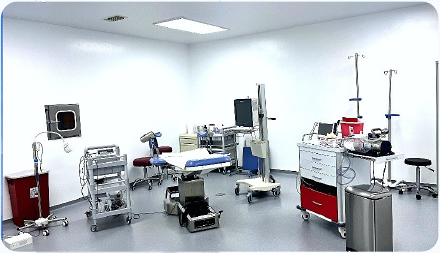
For many people going through IVF, the embryo that eventually enters the uterus does so weeks, months, or even years after it was created, because it spent the intervening time frozen in liquid nitrogen. Frozen embryo transfer, or FET, has become a routine part of modern fertility treatment, yet the vocabulary around it, vitrification, cryoprotectants, medicated versus natural cycles, lining checks, and progesterone timing, can feel like a second language. This article walks through what a frozen embryo transfer is and how it differs from a fresh one, the reasons clinics freeze embryos in the first place, how freezing and thawing actually work in the laboratory, how long embryos can remain in storage, how soon after egg retrieval a frozen transfer can happen, the practical differences between a medicated and a natural FET cycle, a step-by-step timeline of each, what happens on transfer day itself, and the questions worth bringing to the clinic. It draws on patient information from Cleveland Clinic, the UK fertility regulator HFEA, the American Society for Reproductive Medicine's ReproductiveFacts.org, Duke Health, an open-access study published on PMC, CNY Fertility, and the Reproductive Science Center of the San Francisco Bay Area. It is general education only, and every individual decision belongs with the treating clinic and a licensed physician.
What is a frozen embryo transfer (FET)?
A frozen embryo transfer, usually shortened to FET, is a treatment cycle in which an embryo created during an earlier IVF cycle is thawed and placed into the uterus. Cleveland Clinic explains that embryo freezing, also called embryo cryopreservation, is a process to freeze and store embryos for later use, an embryo being an egg that has been fertilized by sperm. The HFEA, the UK fertility regulator, notes that some people having fertility treatment have embryos which are not transferred in their IVF cycle, and that these can be preserved for use in later treatment. Timing is the clearest difference between a frozen transfer and a fresh one. Duke Health describes the fresh approach as retrieving the eggs, fertilizing them, and placing one or more embryos in the uterus within the same treatment, whereas in a frozen transfer the embryos are frozen and the transfer takes place after waiting a few weeks for the patient to enter a new menstrual cycle. The transfer cycle itself is relatively short: CNY Fertility, a US clinic that publishes a detailed patient timeline, notes that FET cycles generally span two to three weeks, although exact timing varies with the protocol. Whether a fresh or a frozen transfer fits a particular treatment plan depends on the full clinical picture, and that decision belongs with the treating clinic and a licensed physician.
Why do clinics freeze embryos instead of transferring them fresh?
The reasons fall broadly into two groups: making use of extra embryos, and deliberately planning a later transfer. Cleveland Clinic lists several purposes for embryo freezing, including storing extra embryos created during IVF or ICSI, postponing implantation after fertilization, delaying IVF to a later date, keeping a backup if early treatment attempts do not lead to pregnancy, donating unused embryos to others or to researchers, and preserving fertility before medical treatment such as chemotherapy or radiation for cancer. The HFEA gives a similar list, noting that good-quality embryos remaining after a transfer can be stored rather than discarded, that frozen embryos can be used in future cycles or to try for siblings, that freezing is an option when treatment is cancelled after egg collection, and that it can preserve fertility for people whose medical conditions or treatments may affect it. There is also a deliberate freeze-all strategy: Duke Health explains that some clinics advocate freezing because the process that stimulated the eggs makes the lining of the uterus less welcoming for pregnancy, so the transfer is moved to a later, unstimulated cycle. The ASRM ReproductiveFacts.org patient booklet adds a practical point, explaining that cryopreservation makes future treatment cycles simpler and less invasive than the initial IVF cycle, since the woman does not require ovarian stimulation or egg retrieval again. Whether to freeze some, all, or none of the embryos in a given cycle is a decision for the treating clinic and a licensed physician.
How are embryos frozen and thawed in the laboratory?
The ASRM ReproductiveFacts.org booklet explains that there are two methods used to cryopreserve embryos: conventional slow freezing and vitrification, or fast freezing. The HFEA describes the process from the patient's side, noting that only good quality embryos are chosen to freeze, that embryos can be frozen at various stages of development from a single cell through to the blastocyst, and that they are put in a special solution containing cryoprotectants, substances that help draw water out from the embryo and provide protection in the cells; they are then frozen, mostly by vitrification, and stored in tanks of liquid nitrogen. Cleveland Clinic adds the laboratory detail: in vitrification, a cryoprotective agent that acts like antifreeze is added and the embryos are immediately placed into liquid nitrogen at minus 321 degrees Fahrenheit, about minus 196 degrees Celsius, while slow freezing uses smaller amounts of cryoprotectant and cools the embryos over approximately two hours, with the embryos stored in containers that look like small straws, labelled with identifying details. Thawing reverses the journey: Cleveland Clinic describes removing the embryo from the nitrogen, warming it to normal temperature, and soaking it to remove the cryoprotectant. Not every embryo comes through, since the HFEA states that not all embryos will survive the freezing and thawing process, though a surviving embryo that loses one or two cells will in many cases recover and continue to develop. Laboratory-specific questions belong with the treating clinic and a licensed physician.
How long can embryos stay frozen?
Frozen embryos do not age in storage. Cleveland Clinic explains that stored embryos remain the biologic age at which they are frozen, so an embryo created and frozen in one year is biologically the same embryo when it is thawed much later, and the same source notes that embryos are often stored for ten years. In many countries the practical limit is set by law and consent rather than by biology: the HFEA states that in the UK embryos can now be stored for up to a maximum of 55 years from the date they are first placed in storage, provided consent is renewed every ten years. On the question of how long frozen embryos remain usable, the ASRM ReproductiveFacts.org booklet states that once frozen, embryos may be stored for prolonged periods, and that live births have been reported using embryos that had been frozen for almost 20 years. The booklet also addresses safety directly, saying that although there are theoretical risks, freezing of sperm, eggs, and embryos is very safe. Storage limits, consent renewals, and the rules that apply when people move between countries differ from place to place, so anyone planning long-term storage should confirm the specific arrangements, in writing, with the treating clinic, and discuss the medical side of any long storage interval with a licensed physician.
How soon after egg retrieval can a frozen embryo transfer take place?
A frozen transfer, by definition, does not happen in the same cycle as the egg retrieval. Duke Health draws the contrast clearly: in a fresh transfer the eggs are retrieved, fertilized, and one or more embryos are placed in the uterus within the same treatment, whereas a frozen transfer happens after waiting a few weeks for the patient to enter a new menstrual cycle. In practice, that means a frozen transfer is commonly scheduled in a following menstrual cycle, several weeks after retrieval, and the transfer cycle itself then takes time as well, since CNY Fertility notes that FET cycles generally span two to three weeks from the baseline visit to the transfer. For people whose periods are irregular or absent, the HFEA explains that clinics use drugs to suppress the natural cycle and trigger a false period before starting the medication that prepares the womb lining, which adds further time to the calendar. Duke Health also acknowledges the emotional dimension of this gap, noting that a fresh transfer spares the patient additional waiting and another cycle of hormones, which can be emotionally draining, a trade-off each patient weighs differently. There is no single correct interval between retrieval and transfer, and embryos can also remain frozen far longer than one cycle, so the right start date for an individual FET is a scheduling and medical decision for the treating clinic and a licensed physician.
What is the difference between a medicated and a natural FET cycle?
The difference is who controls the hormones. An open-access study published on PMC explains that in the artificial, or medicated, protocol the endometrium is prepared via the administration of exogenous estrogens and progesterone, ovulation does not occur, and a corpus luteum is lacking, whereas in the natural cycle protocol the timing of the transfer is established according to the urinary preovulatory LH peak detected in a spontaneous ovarian cycle, which leaves a corpus luteum in place; in a modified natural cycle, an hCG trigger is given when a preovulatory follicle is identified on ultrasound. The HFEA frames the same choice simply: people with regular periods may have an embryo transferred without fertility drugs, with ultrasound and hormone testing used to check when the lining is ready, while people with irregular or absent periods are given drugs to suppress the cycle and trigger a false period, then medication to prepare the womb lining. The Reproductive Science Center of the San Francisco Bay Area sets out the trade-offs: medicated cycles need fewer monitoring visits, allow the transfer date to be scheduled, and suit patients with a history of thin lining, but involve more medications, including daily intramuscular injections; natural cycles use fewer medications but require frequent monitoring, can be cancelled if ovulation timing is missed, and do not suit irregular cycles. The PMC study adds that it observed certain obstetric complications more often after artificial preparation. Protocol choice belongs with the treating clinic and a licensed physician.
What does a frozen embryo transfer timeline look like, step by step?
CNY Fertility publishes a day-by-day picture of a medicated cycle. It begins with a baseline ultrasound and bloodwork to confirm it is safe to start estrogen; estrogen is then taken daily to thicken and stabilize the endometrium; around day ten, a monitoring ultrasound and bloodwork confirm the lining is ready for progesterone; progesterone then starts on a schedule set by the embryo's stage, three days before a cleavage-stage transfer or five days before a blastocyst transfer; and the transfer itself takes place around day sixteen. The Reproductive Science Center of the San Francisco Bay Area describes the same structure with slightly different numbers, with estrogen taken for approximately two to three weeks, usually as an oral pill, an ultrasound confirming the lining is adequately thick, and progesterone given by daily vaginal suppositories and intramuscular injection starting exactly six days before the transfer, a reminder that exact day counts vary between clinic protocols. A natural cycle follows the body instead: CNY Fertility describes monitoring that begins early in the menstrual cycle and continues around days ten to fourteen to detect the LH surge and confirm ovulation, with the transfer three days after ovulation for cleavage-stage embryos or five days after for blastocysts, while the Reproductive Science Center notes the LH surge precedes ovulation by about 24 hours and that letrozole or an hCG injection can help trigger ovulation. The schedule that applies to any individual cycle comes from the treating clinic and a licensed physician.
What happens on the day of a frozen embryo transfer?
Transfer day is usually brief and undramatic. The embryo is warmed first: Cleveland Clinic describes thawing as removing the embryo from the liquid nitrogen, warming it to normal temperature, and soaking it to remove the cryoprotectant that protected its cells during freezing. CNY Fertility then describes the transfer itself as the thawed embryo being transferred into the uterus during a quick, painless procedure. How many embryos go back is a regulated and clinical decision rather than a personal preference: the HFEA states that clinics usually transfer one embryo, and that three embryos can be transferred only in exceptional circumstances in patients over 40. The day of transfer is not the end of the medication calendar. The Reproductive Science Center of the San Francisco Bay Area explains that in a medicated cycle both estrogen and progesterone continue for approximately six to seven weeks after the transfer, and that in a natural cycle vaginal progesterone support is recommended from ovulation until five to six weeks after the transfer. The wait for an answer is measured in days rather than hours: CNY Fertility notes that a pregnancy test is done ten to fourteen days after the transfer, which is why this stretch is often called the two-week wait. Exactly how transfer day runs, what to bring, and how medications should be taken afterwards are instructions that come from the treating clinic and a licensed physician.
What questions should intended parents ask their clinic about frozen embryo transfer?
A frozen transfer involves choices at almost every step, and the sources in this article map out where the useful questions sit. Duke Health's discussion of fresh versus frozen transfer shows that clinics differ on when freezing is advisable, so the reasoning behind a freeze-all recommendation is worth hearing in full. The HFEA and the PMC study both show that more than one way exists to prepare the uterus, and the Reproductive Science Center of the San Francisco Bay Area lays out concrete trade-offs between medicated and natural cycles in monitoring visits, medications, and scheduling, all of which can be discussed before a protocol is chosen. Cleveland Clinic and the HFEA are both candid that not all embryos survive freezing and thawing, so it is reasonable to ask in advance how the laboratory handles a thaw that does not go to plan. The HFEA's description of UK storage limits, with consent renewed every ten years, is a reminder that storage is governed by paperwork as well as biology, and that the rules differ by country. The questions below are starting points for those conversations. None of them replaces individual advice, and every decision about freezing, protocol choice, and transfer timing belongs with the treating clinic and a licensed physician.
- Is a fresh transfer or a freeze-all approach recommended for this cycle, and what is the reasoning in this specific case?
- Would a medicated, natural, or modified natural FET protocol suit this medical history, and why?
- Which medications would be involved, in what form, and for how long before and after the transfer?
- How does the laboratory thaw embryos, and what is the plan if an embryo does not survive the thaw?
- How many monitoring visits should be planned, and how and when will the transfer date be confirmed?
- How long can the embryos remain in storage, which consents need renewing, and how are decisions about remaining embryos made over time?
SOURCES
Sources and review method
Editorially reviewed against the sources below on the first of October 2026. Nothing here is a diagnosis or a personalised recommendation, and every decision about embryo freezing, thawing, endometrial preparation, choice between a medicated and a natural transfer cycle, or transfer timing requires a licensed physician who knows the full medical history of the person concerned, together with the treating clinic.
- Cleveland ClinicEmbryo Freezing (Cryopreservation): Purpose & Results
Supports the statements that embryo freezing, also called embryo cryopreservation, is a process to freeze and store embryos for later use; that an embryo is an egg that has been fertilized by sperm; that reasons for freezing include storing extra embryos created during IVF or ICSI, postponing implantation after fertilization, delaying IVF to a later date, keeping a backup if early treatment attempts do not lead to pregnancy, donating unused embryos to others or to researchers, and preserving fertility before medical treatment such as chemotherapy or radiation for cancer; that in vitrification a cryoprotective agent that acts like antifreeze is added and the embryos are immediately placed into liquid nitrogen at minus 321 degrees Fahrenheit, about minus 196 degrees Celsius; that slow freezing uses smaller amounts of cryoprotectant and cools the embryos over approximately two hours; that embryos are stored in containers that look like small straws, labelled with identifying details; that stored embryos remain the biologic age at which they are frozen; that embryos are often stored for ten years; that freezing and thawing can damage embryos and some or all may not survive; and that thawing involves removing the embryo from the nitrogen, warming it to normal temperature, and soaking it to remove the cryoprotectant.
- HFEA (UK fertility regulator)Embryo freezing
Supports the statements that some people having fertility treatment have embryos which are not transferred in their IVF cycle and that these can be preserved for use in later treatment; that good-quality embryos remaining after a transfer can be stored rather than discarded; that frozen embryos can be used in future cycles or to try for siblings; that freezing is an option when treatment is cancelled after egg collection; that freezing can preserve fertility for people whose medical conditions or treatments may affect it; that only good quality embryos are chosen to freeze; that embryos can be frozen at various stages of development, from a single cell through to the blastocyst; that embryos are put in a special solution containing cryoprotectants, substances that help draw water out from the embryo and provide protection in the cells; that embryos are then frozen, mostly by a technique called vitrification, or fast freezing, and stored in tanks of liquid nitrogen; that in the UK embryos can be stored for up to a maximum of 55 years from the date they are first placed in storage, with consent renewed every ten years; that not all embryos will survive the freezing and thawing process and very occasionally no embryos will survive; that a surviving embryo may lose one or two cells and in many cases will recover and continue to develop; that people with regular periods may have an embryo transferred without fertility drugs, with ultrasound and hormone testing used to check when the womb lining is ready; that people with irregular or absent periods are given drugs to suppress the natural cycle and trigger a false period, followed by medication to prepare the womb lining; and that clinics usually transfer one embryo, with three embryos transferred only in exceptional circumstances in patients over 40.
- ASRM ReproductiveFacts.orgAssisted Reproductive Technologies patient education booklet
Supports the statements that extra embryos remaining after the embryo transfer may be cryopreserved for future transfer; that cryopreservation makes future treatment cycles simpler and less invasive than the initial IVF cycle, since the woman does not require ovarian stimulation or egg retrieval again; that there are two methods used to cryopreserve embryos, conventional slow freezing and vitrification, or fast freezing; that not all embryos survive the freezing and thawing process; that once frozen, embryos may be stored for prolonged periods, and live births have been reported using embryos that had been frozen for almost 20 years; and that although there are theoretical risks, freezing of sperm, eggs, and embryos is very safe.
- Duke HealthFor Women Undergoing IVF, Is Fresh or Frozen Embryo Transfer Best?
Supports the statements that in a fresh transfer doctors retrieve the eggs, fertilize them, and place one or more embryos in the mother within the same treatment; that in a frozen transfer the embryos are frozen and the transfer takes place after waiting a few weeks for the patient to enter a new menstrual cycle; that some clinics advocate freezing because the process that stimulated the eggs makes the lining of the uterus less welcoming for pregnancy; and that a fresh transfer spares the patient additional waiting and another cycle of hormones, which can be emotionally draining.
- PMC (open access)Reproductive and Obstetric Outcomes Following a Natural Cycle vs. Artificial Endometrial Preparation for Frozen-Thawed Embryo Transfer
Supports the statements that in the natural cycle protocol the timing of embryo transfer is established according to the urinary preovulatory LH peak detected in a spontaneous ovarian cycle; that in a modified natural cycle an hCG trigger is administered when a preovulatory follicle is identified on ultrasound; that natural cycles result in the presence of a corpus luteum; that ultrasound monitoring in natural cycles begins around cycle days 7 to 10; that in the artificial protocol the endometrium is prepared via the administration of exogenous estrogens and progesterone, ovulation does not occur, and a corpus luteum is lacking; that the artificial protocol is easily organized even at a distance and applies to all women independent of their menstrual regularity, including women with chronic anovulation and egg donation cycles; and that the study reported certain obstetric complications, including pregnancy-induced hypertension, abnormal placental insertion, and postpartum hemorrhage, more often after artificial endometrial preparation than after natural cycles.
- CNY FertilityFrozen Embryo Transfer Timeline: What to Expect in an FET Cycle
Supports the statements that FET cycles generally span two to three weeks, though exact timing varies by protocol; that a medicated FET cycle begins with a baseline ultrasound and bloodwork to confirm it is safe to start estrogen; that estrogen is then taken daily to thicken and stabilize the endometrium; that around day ten a monitoring ultrasound and bloodwork confirm the endometrium is ready for progesterone; that progesterone is started based on embryo stage, three days before a cleavage-stage transfer or five days before a blastocyst transfer; that the transfer in a medicated cycle takes place around day sixteen, when the embryo is thawed and transferred into the uterus during a quick, painless procedure; that in a natural FET cycle monitoring begins early in the menstrual cycle and continues around days ten to fourteen to detect the LH surge and confirm ovulation timing; that in a natural cycle the transfer occurs three days after ovulation for cleavage-stage embryos or five days after ovulation for blastocysts; and that a pregnancy test is done ten to fourteen days after the transfer.
- Reproductive Science Center of the San Francisco Bay AreaMedicated Versus Natural Frozen Embryo Transfer
Supports the statements that in a medicated cycle estrogen is usually taken as an oral pill, though sometimes via patch or vaginally, for approximately two to three weeks; that an ultrasound confirms the endometrial lining is adequately thick before progesterone begins; that progesterone is given via daily vaginal suppositories and intramuscular injection starting exactly six days before the transfer; that both hormones continue for approximately six to seven weeks after the embryo transfer; that in a natural cycle monitoring occurs frequently, sometimes daily, after cycle days nine to ten to detect the LH surge, which precedes ovulation by about 24 hours; that in a natural cycle the transfer is scheduled six days after ovulation and vaginal progesterone support is recommended from ovulation until five to six weeks after the transfer; that letrozole or an hCG injection can be used to help trigger ovulation in a natural cycle; that medicated cycles require fewer monitoring visits, allow the transfer date to be scheduled, and are considered a better option for patients with a history of thin endometrial lining, but involve more medications, including daily intramuscular injections; and that natural cycles use fewer medications and have been observed to have lower rates of hypertensive disorders of pregnancy, including pre-eclampsia, but are unsuitable for women with irregular cycles or who are peri-menopausal, require more frequent monitoring, can be cancelled if ovulation timing is missed, and cannot be reliably scheduled around patient convenience.